The Right Room to Recover In: Housing and Adaptation Decisions After Serious Injury
When a serious injury changes the way someone moves, sees, hears or remembers, the family home can turn from a place of safety into a daily obstacle course. A step at the front door, a bathroom upstairs, a narrow hallway or a kitchen that assumes two good hands may each become a small problem that adds up. The natural response is to start ringing builders. A calmer first step is to ask what the home needs to do — not what it could be made to look like.
Start with an assessment, not a quotation
Housing adaptation should begin with an occupational therapist, not a contractor. An OT can look at how the injured person manages washing, dressing, cooking, moving around the property and getting in and out of it. They can distinguish between what is needed now, what may be needed as recovery settles, and what may never be needed at all. That assessment is often the difference between a sensible plan and an expensive guess.
There are several routes to an OT assessment. A local authority adult social care team may provide one, although waiting times vary. The NHS may already be involved through community rehabilitation. Where a claim is underway, the insurer may fund an assessment under the Rehabilitation Code or as part of an interim payment arrangement. A private OT can also be instructed, but families should check qualifications, experience in serious injury and whether the report will be accepted by funders or the court.
Urgent works and permanent works are different questions
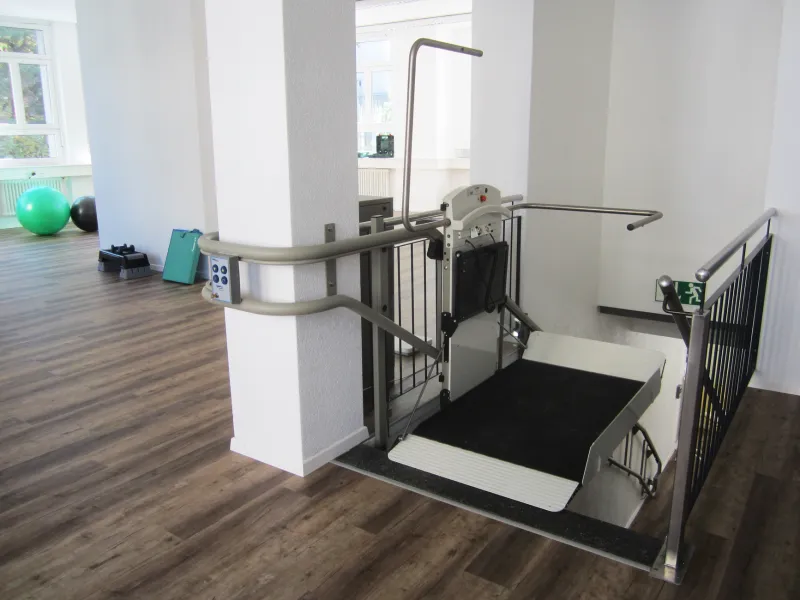
Some changes cannot wait. A temporary ramp, a grab rail, a bedside commode, a hospital bed downstairs or a stairlift may be needed to get someone home safely. These are often reversible and should not be delayed while a long-term plan is debated. Other works — a ground-floor wet room, a widened doorway, a through-floor lift or an extension — are permanent and should be considered more carefully.
The key question is prognosis. If the injured person's condition is still changing, a permanent adaptation may become obsolete before the plaster dries. A well-designed adaptable scheme can reduce that risk: level access, generous door widths, a downstairs WC and a shower area that can be used with or without a seat are often more useful than highly specialised fixtures. Over-adapting to a single snapshot of need can waste money and make a property harder to use later.
Funding before settlement
The Disabled Facilities Grant is the best-known route for home adaptations in England, Wales and Northern Ireland, with separate schemes in Scotland. It is administered by local authorities, subject to a means test and a cap, and the rules differ across the UK. It can fund adaptations such as ramps, widening doors, improving access to bathrooms and bedrooms, and some heating or lighting changes. It is not a quick process, and it rarely covers the full cost of major building work. Families should ask the local authority's housing adaptations team for advice early, and should not assume that a grant application and a compensation claim cannot run alongside each other.
Interim payments can also fund adaptations while a claim is ongoing. Insurers may agree to pay for an OT report, building works or specialist equipment where the need is clear and the cost is reasonable. The important discipline is evidence: obtain the OT recommendation, a specification, comparable quotations and photographs. Keep receipts and a clear record of what was paid for and why. If the work is later included in the settlement, that paper trail matters.
When housing becomes part of the claim
A serious injury settlement can include an accommodation claim. Depending on the evidence, this may cover the extra cost of buying a suitable property, the cost of adapting an existing home, or the additional running costs of a larger or specially adapted property. The court will want proof of need, not merely preference. It will ask whether the proposed property is reasonable, whether the adaptations are necessary and whether the figures are supported by an OT, an architect or a costs expert.
This is where the phrase about pouring the settlement into bricks and mortar becomes relevant. Compensation is not a blank cheque for a dream home. If too much is spent on permanent works that are not linked to assessed need, the injured person may be left short for care, equipment, transport or everyday support. Conversely, under-planning can leave a family in a property that cannot meet changing needs, forcing another move later. The aim is a home that works, not a monument to the injury.
Benefits, trusts and the longer view
Capital held in a property can affect means-tested benefits. A personal injury trust is often used to protect compensation, and property purchased through a trust or with trust funds needs careful legal and financial advice. The interaction between a Disabled Facilities Grant, a personal injury trust, a property purchase and any charge on the property should be checked before contracts are exchanged. These are not decisions to make on the basis of a builder's estimate alone.
A practical sequence
- Obtain an OT assessment of daily living and housing needs.
- Separate urgent safety works from permanent adaptation.
- Ask the local authority about Disabled Facilities Grant eligibility and timescales.
- Ask the insurer or solicitor whether interim payments can fund assessed works.
- Get a specification and more than one quotation for major works.
- Check the effect on benefits and any trust arrangements.
- Keep every report, invoice and photograph.
- Review the plan as the prognosis becomes clearer.
Questions worth asking
Will this adaptation still be right in two years? Is the property adaptable, or is it being altered to fit one moment? Has the OT seen the property, not just the medical records? Who will maintain the equipment? Does the local authority grant cover the work, or only part of it? If the property is purchased as part of the settlement, who will own it and how will it be held? What happens if the injured person's needs change again?
A serious injury already takes enough from a family. Housing decisions should not add a second layer of avoidable pressure. With early advice, a clear OT assessment and a realistic view of funding, it is possible to make a home safer and more workable without turning the settlement into a permanent fixture that no longer fits the life it was meant to serve.
This article is general information for UK readers and is not legal or financial advice. Anyone facing these decisions should speak to a solicitor, an occupational therapist and an independent financial adviser.