Before the Loop Erases It: Securing Video Evidence After a Serious Road Collision
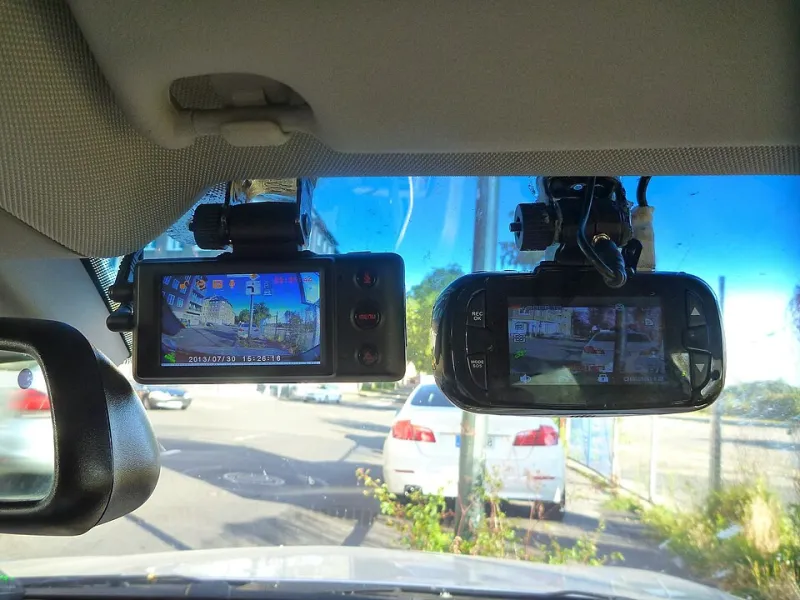
Photo: Fernost, Public domain, via Wikimedia Commons
A serious road collision can leave a family dealing with hospital appointments, insurance calls and a sudden absence of certainty. In the middle of that, a small piece of video may become one of the clearest records of what happened. It might show a vehicle's position, a change of lane, a traffic signal, or the moments before impact. It can also disappear long before anyone thinks to ask for it.
The purpose of this article is not to turn relatives into investigators. It is to set out a calm, practical approach to preserving dashcam, CCTV, doorbell and vehicle telematics footage while a serious injury claim is still taking shape. The earlier those steps begin, the less likely it is that important material is overwritten, deleted or lost through ordinary storage routines.
Why footage disappears faster than expected
Most dashcams record in a loop. When the memory card fills, the oldest files are overwritten so that recording can continue. Some devices have a parking mode or an incident button that locks a short clip, but that depends on the model and on whether anyone pressed the button. A family should not assume that a dashcam has kept the relevant section simply because it was switched on at the time.
CCTV systems used by shops, garages, bus operators, local authorities and homeowners vary widely. Some retain recordings for a few days; others keep them for several weeks. Doorbell cameras often store clips in a cloud account with a subscription or a short retention period. Vehicle telematics, such as black boxes used by insurers, may record speed, braking and location data rather than video, but that data can also be overwritten or retained only for a limited period.
Police forces may seize or download footage that is relevant to an investigation, but they are not an indefinite archive for every camera in the area. Insurers may request footage, but they do not necessarily hold all of it. The practical point is simple: preservation is usually a matter of days, not months.
The first 72 hours: build a simple evidence log
In the immediate aftermath, families should write down what they know while it is fresh. A notebook or a note on a phone is sufficient. The aim is to create a clear list of possible sources, not to reach conclusions about fault.
Useful details include the date and time of the collision, the road and direction of travel, nearby junctions, businesses, bus stops, petrol stations, homes with doorbells, and any local authority or National Highways cameras in the area. If there is a police collision reference, record it. If the vehicle had a dashcam or a telematics device, note the make and model where known.
It is also worth noting who has already mentioned footage. A witness may have said they saw a camera on a nearby house. A recovery driver may have mentioned a dashcam. A bus company may have been passing at the time. These small leads are easier to follow up if they are written down.
Where possible, keep the original device and memory card. Do not format the card, delete files to make space, or record over the incident clip. If the dashcam has been removed from the vehicle, store it safely and tell the solicitor that it exists.
What not to do with the footage
A common mistake is to edit a clip before anyone has preserved the original. Cropping, trimming, adding captions, compressing a file for messaging apps or uploading it to social media can all create doubts about whether the recording is complete. Even a well-meaning edit can make it harder to show that the footage has not been altered.
Families should also be cautious about public posts. A short clip posted online may be shared widely, commented on and downloaded by others. It may also draw attention to the evidence before a solicitor has had a chance to send preservation requests. In a serious injury claim, the other side may later examine social media activity, so restraint is usually wiser than a rapid upload.
If someone offers footage, avoid asking them to send a compressed copy through a messaging app as the only record. Ask them to keep the original file or device in place, and pass their details to the solicitor. A short message confirming that they have the footage and will not delete it can be useful, but it should not replace a formal preservation request.
Preservation requests and the role of a solicitor
A solicitor can send written preservation requests to businesses, local authorities, transport operators, homeowners and insurers. These letters typically identify the collision, the date and time, the location and the camera sought, and ask the holder not to delete or overwrite the relevant material. They also ask for the footage to be retained in its original form.
Where appropriate, a solicitor may use data protection rights to request a copy of footage held by an organisation. This is not always a quick process, and it does not guarantee that the footage still exists. That is why the request should be sent early, and why a family should not wait for the claim to be fully investigated before mentioning a camera they have spotted.
The police should also be told about any footage that may be relevant. If officers have already attended, the collision reference should be quoted. If a dashcam or doorbell recording is known, the solicitor can ask the police whether it has been obtained and retained. A family does not need to resolve these questions alone; the important step is to flag them while there is still time.
Keeping a reliable record of who holds what
A simple log can prevent confusion later. It does not need to be elaborate. A table or list with the following columns is enough:
| Location or device | Possible holder | Date contacted | Request sent by | Response | Copy held |
|---|---|---|---|---|---|
| Dashcam in family vehicle | Vehicle owner | ||||
| Shop camera near junction | Business owner | ||||
| Doorbell camera opposite | Homeowner | ||||
| Bus passing at time | Bus operator | ||||
| Traffic camera | Local authority |
This record helps everyone avoid duplicating requests and makes it easier to see which sources have been preserved. It also provides a factual account of the steps taken, which can be useful if a dispute later arises about whether footage was available.
If the footage has already gone
The loss of a recording is not the end of a serious injury claim. Witness statements, police reports, vehicle damage, telematics data, medical records and scene photographs may still provide a detailed picture. The earlier a solicitor knows what has been lost, the sooner they can focus on the evidence that remains.
Families should not spend time blaming themselves for not acting sooner. A serious injury creates pressure and exhaustion. The practical response is to tell the solicitor what cameras existed, who may have held the footage, and what has been done so far. That information allows the claim to move forward with a clearer understanding of the evidence.
A measured first step
Preserving video evidence is not about conducting an inquiry in the first week. It is about recognising that some records are temporary, writing down what might exist, avoiding changes to the original material, and asking a solicitor to send preservation requests promptly. Those steps are modest, but they can protect a valuable account of the collision while the family focuses on recovery and support.