Wheels, Badges and Paperwork: Mobility Support While a Serious Injury Claim Is Still Moving
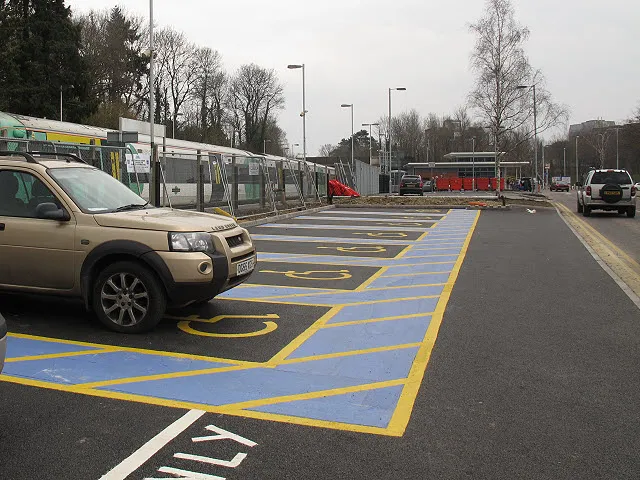
Photo: Stephen Craven , CC BY-SA 2.0, via Wikimedia Commons
A serious injury often changes the practical business of getting out of the house long before anyone talks about compensation. Hospital appointments, school runs, work and family visits all depend on transport. For some people, the first meaningful question is not how much a claim is worth, but how to park closer to the entrance, how to travel without pain, or how to carry a wheelchair. Those are everyday mobility questions, and they deserve attention while the claim is still moving.
Mobility support is not the same as a settlement
Blue Badges, the Motability Scheme and vehicle adaptations are sometimes discussed as though they arrive with a compensation payment. In practice, they are separate support routes with their own rules. A Blue Badge is issued by a local authority under the Blue Badge scheme. The Motability Scheme is a charity-run leasing scheme linked to qualifying mobility allowances. Vehicle adaptations may be funded through Motability, through a rehabilitation or interim payment arrangement in a claim, through charitable grants, or privately.
None of these routes should be assumed. Each depends on eligibility, evidence and, in some cases, timing. The useful approach is to treat mobility as a practical workstream that sits alongside the claim, not behind it.
Blue Badge: a parking concession with its own tests
The Blue Badge scheme operates across the UK, although the detailed rules are set by each nation and administered by local authorities. The badge helps people with severe mobility problems park closer to their destination. It is not means-tested and it is not a payment. It is also not awarded simply because someone has made a serious injury claim.
Eligibility usually falls into two broad groups. Some people qualify automatically because they receive a qualifying benefit at a particular rate, such as the higher rate mobility component of Disability Living Allowance or the enhanced rate of the mobility component of Personal Independence Payment for those who score enough points for the moving around activity. Others may qualify after further assessment, where the council is satisfied that the person has a permanent and substantial disability that causes very considerable difficulty in walking or, in some cases, a risk of serious harm.
For a person recovering from a serious injury, the word permanent matters. A Blue Badge is generally aimed at enduring mobility difficulty, not a short-term recovery period. Some councils may have limited discretion in narrow circumstances, but it is unwise to assume a temporary badge will be available. The practical step is to check the current guidance for the relevant nation and speak to the council's Blue Badge team. They can explain the application process, the evidence they accept and whether an assessment is likely.
The Motability Scheme: a lease built around a qualifying allowance
The Motability Scheme is often mentioned in the same breath as serious injury, but it is not a compensation scheme and it is not open to everyone with a mobility problem. It allows eligible people to lease a car, wheelchair-accessible vehicle, scooter or powered wheelchair using a qualifying mobility allowance. The allowance is usually paid for a fixed period, and the scheme generally requires enough time left on the award to support the lease.
That means a person who does not receive a qualifying mobility allowance may not be able to use Motability, however serious their injury. Conversely, someone who already receives the right benefit may be able to start the process without waiting for a claim to conclude. The scheme can include insurance, servicing, repairs and breakdown cover within the lease, which can make budgeting more predictable. An advance payment may be required for some vehicles, and adaptations may affect the overall cost.
For families, the key point is to separate the benefit question from the claim question. If a qualifying allowance is already in payment, it is worth asking Motability directly about eligibility and the range of vehicles available. If it is not, a solicitor or welfare rights adviser can explain whether a benefit application is appropriate. A personal injury claim does not itself create Motability eligibility.
Adaptations: useful, but get the funding route clear first
Vehicle adaptations range from simple additions, such as a swivel seat or a steering aid, to more substantial changes such as a ramp, a hoist or a wheelchair-accessible conversion. The right solution depends on the person's needs, the vehicle and who else will drive. An occupational therapist assessment is often valuable because it looks at transfer, seating, posture and the practical use of the vehicle, not just the medical diagnosis.
Funding is where mistakes can happen. Some adaptations can be arranged through Motability. In a claim, an insurer may agree to fund adaptations as part of rehabilitation or through an interim payment if the need is accepted. Charitable grants sometimes help with specific costs. But retrospective reimbursement is not guaranteed. Before committing to an expensive adaptation, it is sensible to speak to the solicitor handling the claim and, where relevant, the insurer. Ask whether prior approval is needed, what evidence will support the request and how the cost should be recorded.
Evidence that tends to help
Mobility applications and funding requests usually turn on evidence rather than assertion. Useful material may include medical records and letters from treating clinicians, an occupational therapist report, benefit award letters, a copy of a driving licence, quotes for adaptations, and a clear explanation of how the injury affects daily journeys. Photographs can help in some cases, but they should be accurate and not misleading.
For a claim, keep a simple record of mobility-related spending and correspondence. Receipts for taxi fares, parking, temporary transport and equipment may be relevant to the wider claim, but only if they are genuine and properly documented. The same discipline applies to adaptation quotes and installation invoices.
Keeping the claim and the mobility plan in step
Mobility decisions can affect the claim, and the claim can affect mobility decisions. A new vehicle lease, an adapted car or a move to a different property may change what is needed in the future. It is worth telling the solicitor about any significant mobility step so that the medical evidence and the claim's financial picture stay consistent.
Equally, do not let the claim freeze practical decisions. If a Blue Badge application is possible now, or a Motability appointment can be booked, those steps may improve daily life while the legal process continues. The aim is not to prejudge the settlement. It is to make sure that mobility support is considered on its own terms, with the claim kept informed rather than left guessing.
A sensible sequence
First, identify the actual mobility need: parking, vehicle access, passenger transport, scooter use or something else. Second, check eligibility for the relevant route, starting with the local council for a Blue Badge and Motability for a leasing enquiry. Third, ask for an occupational therapist view where adaptations are being considered. Fourth, speak to the solicitor before incurring significant costs that may later be presented as part of the claim. Fifth, keep the paperwork together.
Serious injury claims are often measured in months and years. Mobility cannot always wait that long. With the right route and the right evidence, it is sometimes possible to make everyday journeys easier while the wider claim continues.